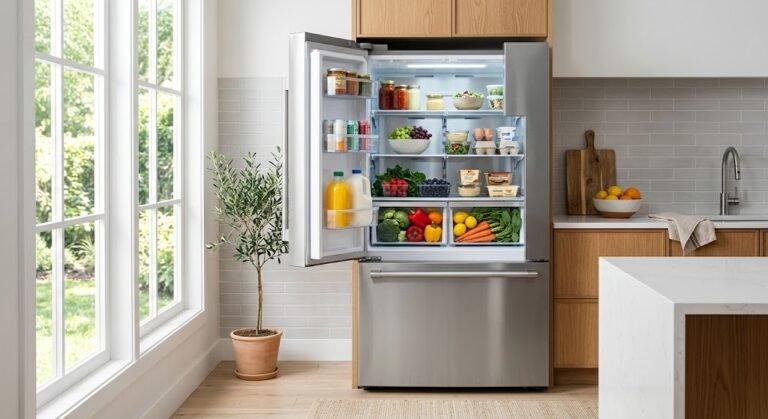
Why Does My Freezer Have Ice Buildup? 6 Proven Fixes
Why Does My Freezer Have Ice Buildup? 6 Proven Fixes
Why does my freezer have ice buildup — I remember the first time I opened my freezer and found a thick layer of frost covering the back wall, thick enough that it was pushing food forward and making the door hard to close properly. It looked dramatic, but the actual cause turned out to be something small I’d been doing for months without realizing it mattered.
Here’s what actually causes this, and what fixes it for good rather than just chipping the ice away temporarily.
A Door That Isn’t Sealing Properly
This is the single most common cause of freezer ice buildup, and it’s easy to miss because the door looks closed even when it isn’t sealing correctly. Every time warm, humid air sneaks in through a weak seal, it hits the cold interior and condenses into frost, which builds up layer by layer over time.
How to check: Close the door on a dollar bill or piece of paper, then try to pull it out. If it slides out with little resistance, the seal (called a gasket) has likely degraded and needs cleaning or replacing. Also run your hand around the door’s edge while the freezer is running — feeling any cold air escaping confirms the issue.
This is one of the most common reasons people notice why does my freezer have ice buildup in the first place.
Leaving the Door Open Too Long or Too Often
Another common reason why does my freezer have ice buildup comes down to simple daily habits. Every time the freezer door is opened, warm air rushes in and immediately starts condensing on the coldest surfaces once the door closes. If you tend to leave the door open while deciding what to grab, or if the freezer is opened very frequently throughout the day, this alone can cause noticeable ice buildup over a few weeks, even with a perfectly good seal.
Placing Warm or Hot Food Directly Inside
Putting warm leftovers straight into the freezer introduces a burst of heat and moisture into a sealed cold environment, which condenses rapidly on nearby surfaces. This is especially common around the holidays or after meal prep sessions, when several warm containers go in at once.
Fix: Let food cool to room temperature before freezing, or use the refrigerator as an intermediate step for an hour before moving items to the freezer.
A Clogged or Frozen Drain Line (Common in Frost-Free Models)
Frost-free freezers have a small drain that channels melted frost away during automatic defrost cycles. If this drain becomes clogged with debris or freezes itself due to a temperature imbalance, water has nowhere to go and refreezes inside the unit instead, often building up in one concentrated area rather than spreading evenly.
Overpacking the Freezer
Packing the freezer too tightly restricts air circulation, which many people don’t realize is essential even in a “cold” appliance. Without proper airflow, temperature regulation becomes inconsistent across different areas, and the resulting temperature swings encourage frost formation, particularly near the back wall and vents.
A Failing Defrost System (In Frost-Free Models)
If you’re still asking why does my freezer have ice buildup after checking the door seal and habits, the defrost system itself might be the cause. Frost-free freezers use a heating element on a timer to periodically melt any developing frost before it accumulates. If this defrost heater, timer, or thermostat fails, the unit effectively behaves like an older manual-defrost freezer, and ice builds up continuously without the automatic melt cycle to manage it. This is more likely if the buildup keeps returning quickly even after you’ve addressed sealing, food placement, and organization.
If your freezer is fine but the fridge section isn’t cooling properly, that’s usually a separate issue — check out our guide on refrigerator not cooling for a full breakdown of causes and fixes.
If your freezer is fine but the fridge section isn’t cooling properly, that’s usually a separate issue — check out our guide on refrigerator not cooling for a full breakdown of causes and fixes.
How to Actually Clear Existing Buildup
Once you’ve identified the likely cause, clearing existing ice properly matters too — chipping at it with sharp tools risks puncturing the freezer’s interior lining or refrigerant lines. The safer approach: unplug the freezer, remove food to a cooler, and let it defrost naturally with the door open (placing towels at the base to catch water), which typically takes several hours depending on how much buildup has accumulated.
Regular defrosting also supports better energy efficiency — the U.S. Department of Energy recommends keeping freezers frost-free for optimal performance, as explained in their appliance energy guide.
If your freezer is fine but the fridge section isn’t cooling properly, that’s usually a separate issue — check out our guide on refrigerator not cooling for a full breakdown of causes and fixes.
Final Thoughts
If you were wondering why does my freezer have ice buildup, the answer usually isn’t complicated. Freezer ice buildup almost always traces back to something letting warm, moist air inside more often than it should — a weak door seal, frequent door openings, or warm food going in directly. Fixing the actual cause matters more than just clearing the ice, since without addressing it, the same buildup returns within weeks.
FAQs
Q: Is ice buildup in a freezer dangerous or just inconvenient?
It’s generally not dangerous, but excessive buildup can affect temperature efficiency, increase energy use, and eventually block airflow that keeps food properly frozen.
Q: How often should I check my freezer’s door seal?
Checking every few months is a good habit, especially since seals gradually wear down and the change often isn’t obvious just by looking.
Q: Can I use a hairdryer to speed up defrosting my freezer?
This isn’t recommended, as mixing heat sources with a wet, electrical environment carries safety risks — patience with natural defrosting or a bowl of hot water placed inside is a safer approach.